

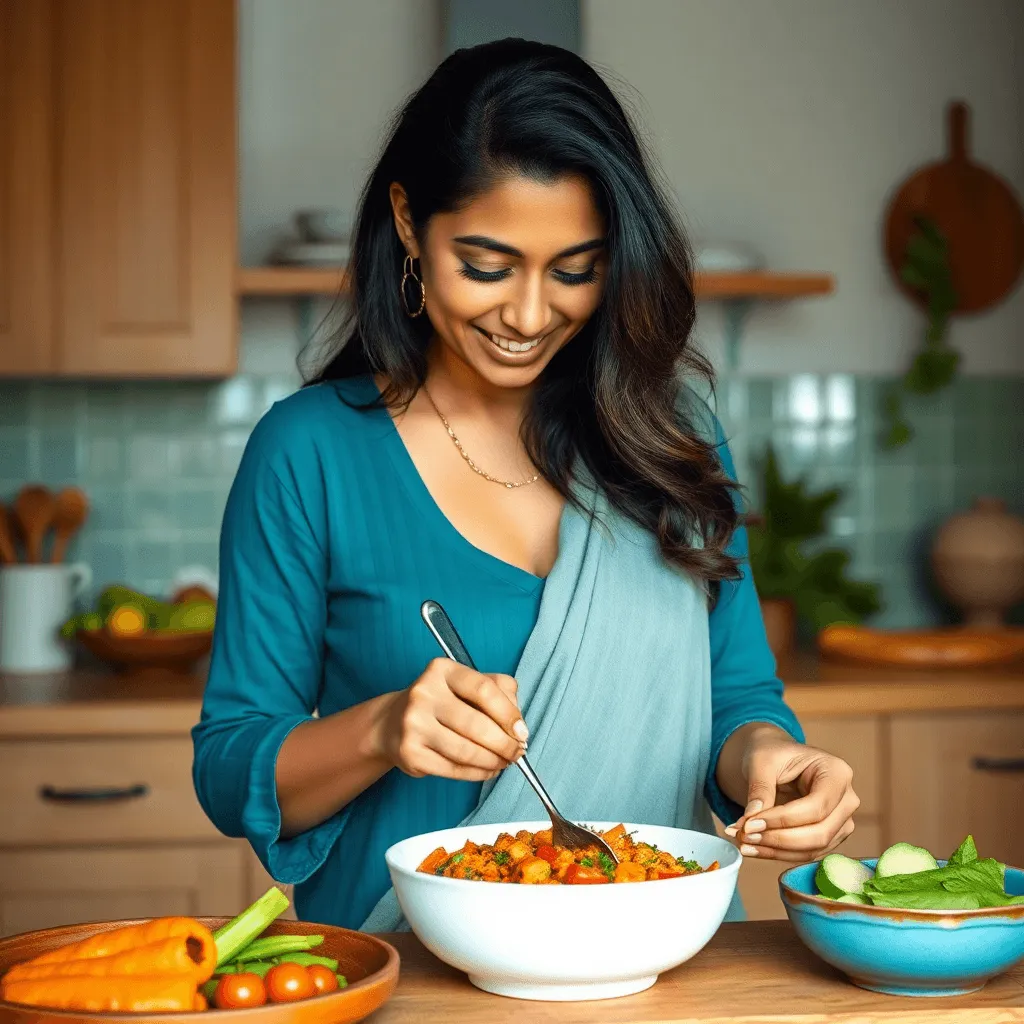
Can what you eat really improve your fertility?
Diet can help, but it is a supporting player, not a cure. The strongest signal comes from the Nurses' Health Study II, where women who most closely followed a "fertility diet" pattern had a 34% lower risk of infertility from ovulation problems compared with those who followed it least (RR 0.34; Chavarro 2007). That is a meaningful shift, yet it applies to one specific cause of infertility and comes from an observational study, so it shows a strong link rather than proof.
Here is the honest summary. A sensible eating pattern, the right pre-pregnancy supplements, and cutting a few clearly harmful things can nudge the odds in your favour. They will not fix blocked tubes, severe male-factor infertility, or low ovarian reserve. Think of food as one lever among several, worth pulling because it is cheap, safe, and good for the rest of your health too.
Key Takeaway
The diet steps with the most reliable evidence are simple: take 400 micrograms of folic acid daily before you conceive, eat a Mediterranean-style pattern rich in vegetables, dal, whole grains, fruit, nuts and fish, and cut trans fats and sugary drinks. The folic acid advice is rock solid; the broader diet links are supportive but mostly observational. Most fancy fertility supplements are not backed by strong proof.
Folic acid: the one supplement with strong proof
Start folic acid before you try to conceive, not after the test turns positive. A Cochrane review of randomised trials found that taking folic acid around the time of conception cut the risk of neural tube defects like spina bifida by about 69% (RR 0.31; De-Regil 2015). This is the rare diet-related claim backed by high-quality trial evidence, not just association.
The standard advice is 400 micrograms (0.4 mg) of folic acid every day, ideally starting at least one month before conception and continuing through early pregnancy (CDC). In India, you can get a tablet at any pharmacy cheaply, and many doctors prescribe it as part of preconception care. Folate-rich foods such as palak and other leafy greens, dal, rajma, and citrus help too, but food alone is not a reliable substitute for the tablet. If you have had a previous pregnancy affected by a neural tube defect, your doctor may advise a much higher dose.
The Mediterranean pattern and IVF
A Mediterranean-style way of eating is linked to better IVF outcomes, though the proof is observational. In a study of 244 women under 35 having IVF, those with the highest adherence to a Mediterranean pattern had a clinical pregnancy rate of 50% versus 29% in the lowest group, and similar gains in live birth (Karayiannis 2018). A smaller study of couples in IVF found higher adherence linked to a modestly better chance of pregnancy (OR 1.4; Vujkovic 2010).
What does the pattern actually mean on an Indian plate? Plenty of vegetables and sabzi, dal and other legumes, whole grains like millets and brown rice, fruit, nuts and seeds, fish a couple of times a week, and oil rather than ghee or vanaspati as the main fat. It is not an exotic import. A balanced thali built around dal, vegetables, curd, and whole grains is already close. The benefit seen in studies was clearest in younger, non-obese women, so treat it as a helpful habit, not a guarantee.
"I tell couples to build a thali they would eat anyway: dal, vegetables, a whole grain, some fish or curd. The Mediterranean evidence is encouraging, not magic, and a sustainable plate beats a cupboard full of supplements every time."
What to cut: trans fats and sugary drinks
Cutting trans fats and sugar-sweetened drinks has clearer evidence than most "superfoods." In the Nurses' Health Study, every 2% of daily energy from trans fat instead of carbohydrate was linked to a 73% higher risk of ovulatory infertility (RR 1.73; Chavarro 2007). Trans fats hide in vanaspati, many commercial fried snacks, bakery items, and reused frying oil, so swapping to regular cooking oils and home-cooked food helps.
Sugary drinks are the other clear target. In a large preconception study, women drinking seven or more sugar-sweetened beverages a week had lower fertility each cycle (fecundability ratio 0.81), with regular soft drinks showing the strongest effect, while diet drinks and juice showed little (Hatch 2018). In practice that means going easy on cola, packaged sweetened juices, and very sweet chai. Plain water, unsweetened chaas, and lighter chai are simple swaps.
Caffeine and alcohol: where do they stand?
You do not need to give up your morning chai or coffee, but heavy intake is best avoided. The ASRM committee opinion notes that moderate caffeine, around one to two cups of coffee a day, has no clear adverse effect on fertility, while high intake of about 500 mg or more than five cups a day has been linked to reduced fertility (ASRM 2022). In pregnancy, many bodies suggest keeping caffeine under roughly 200 mg a day. The underlying evidence is mixed, so this is sensible caution rather than a hard rule.
Alcohol is less clear-cut for fertility, but the same opinion advises avoiding higher intake, more than two drinks a day, when trying to conceive (ASRM 2022). Once you are pregnant or could be, the safest choice is no alcohol at all, since no safe level in pregnancy has been established. For many Indian couples this is straightforward, but it is worth stating plainly.
Vitamin D, omega-3, and antioxidants: real backing vs hype
This is where marketing runs ahead of the science, so be cautious. Vitamin D is one example: a meta-analysis of IVF studies found women with sufficient vitamin D had somewhat better live birth odds than those who were deficient (OR 1.33; Chu 2018), but the studies were observational and inconsistent, so correcting a genuine deficiency is reasonable while routine high-dose supplements are not proven. Omega-3 has gentle support too; in one study, couples eating more seafood took less time to conceive (Gaskins 2018), which points toward fish rather than pills.
Antioxidant supplements are the clearest case of hype outpacing proof. A Cochrane review of 63 trials found only limited, low-quality evidence that they help subfertile women, with no clear effect on live birth (Showell 2020). For men, the most recent Cochrane review of 90 trials found the evidence inconclusive and of very low certainty (de Ligny 2022). They appear safe, but do not delay proven treatment or spend heavily expecting a big payoff. Always review any supplement with your doctor.
A simple fertility-diet plan to start this week
Start folic acid
Take 400 micrograms of folic acid daily before conceiving. This is the one diet-related step with strong trial evidence behind it.
Build a Mediterranean-style thali
Center meals on vegetables, dal and legumes, whole grains, fruit, nuts, and fish a couple of times a week, with oil instead of vanaspati.
Cut trans fats and sugary drinks
Avoid vanaspati, reused frying oil, and packaged fried snacks. Swap colas and sweetened juices for water, chaas, or lighter chai.
Keep caffeine and alcohol modest
Limit coffee to about one to two cups a day, avoid heavy drinking while trying, and avoid alcohol entirely once you could be pregnant.
Be choosy with supplements
Correct a real vitamin D deficiency with your doctor, prefer fish over omega-3 pills, and treat antioxidant blends as unproven, not essential.
Food helps, it does not replace treatment
A good diet improves your odds and your overall health, but it cannot overcome blocked tubes, severe male-factor infertility, or significantly low ovarian reserve. If you have been trying for a year without success, or six months if you are over 35, see a fertility specialist rather than waiting for diet alone to work.
References & Citations
- 1 Chavarro JE, Rich-Edwards JW, Rosner BA, Willett WC. Diet and lifestyle in the prevention of ovulatory disorder infertility. Obstet Gynecol. 2007;110(5):1050-1058. PubMed PMID: 17978119. PubMed ↗
- 2 De-Regil LM, Pena-Rosas JP, Fernandez-Gaxiola AC, Rayco-Solon P. Effects and safety of periconceptional oral folate supplementation for preventing birth defects. Cochrane Database Syst Rev. 2015;(12):CD007950. PubMed PMID: 26662928. PubMed ↗
- 3 Centers for Disease Control and Prevention. Folic Acid: Recommended Intake and Sources. CDC, 2024. CDC ↗
- 4 Karayiannis D, Kontogianni MD, Mendorou C, Mastrominas M, Yiannakouris N. Adherence to the Mediterranean diet and IVF success rate among non-obese women attempting fertility. Hum Reprod. 2018;33(3):494-502. PubMed PMID: 29390148. PubMed ↗
- 5 Chavarro JE, Rich-Edwards JW, Rosner BA, Willett WC. Dietary fatty acid intakes and the risk of ovulatory infertility. Am J Clin Nutr. 2007;85(1):231-237. PubMed PMID: 17209201. PubMed ↗
- 6 Hatch EE, Wesselink AK, Hahn KA, et al. Intake of Sugar-sweetened Beverages and Fecundability in a North American Preconception Cohort. Epidemiology. 2018;29(3):369-378. PubMed PMID: 29384791. PubMed ↗
- 7 Showell MG, Mackenzie-Proctor R, Jordan V, Hart RJ. Antioxidants for female subfertility. Cochrane Database Syst Rev. 2020;8(8):CD007807. Cochrane ↗
- 8 Practice Committee of the American Society for Reproductive Medicine. Optimizing natural fertility: a committee opinion (2022). Fertil Steril. 2022;117(1):53-63. ASRM ↗
Tags
Found this article helpful?
Share it with someone who needs it.