
What is Premature Ovarian Insufficiency (POI)?
Premature ovarian insufficiency (POI) means the ovaries lose their normal function before the age of 40. Periods become irregular or stop, hormone levels change, and the natural store of eggs runs low far earlier than expected. It affects about 1% of women before 40 and around 0.1% before 30. POI is sometimes called premature ovarian failure, but "insufficiency" is the kinder and more accurate word, because ovarian function can come and go rather than switching off completely.
Receiving this diagnosis in your twenties or thirties can feel overwhelming, especially when you hoped to have children. Please know two things. POI is a medical condition, not something you caused. And there are real, well-studied options for both your long-term health and your family-building plans.
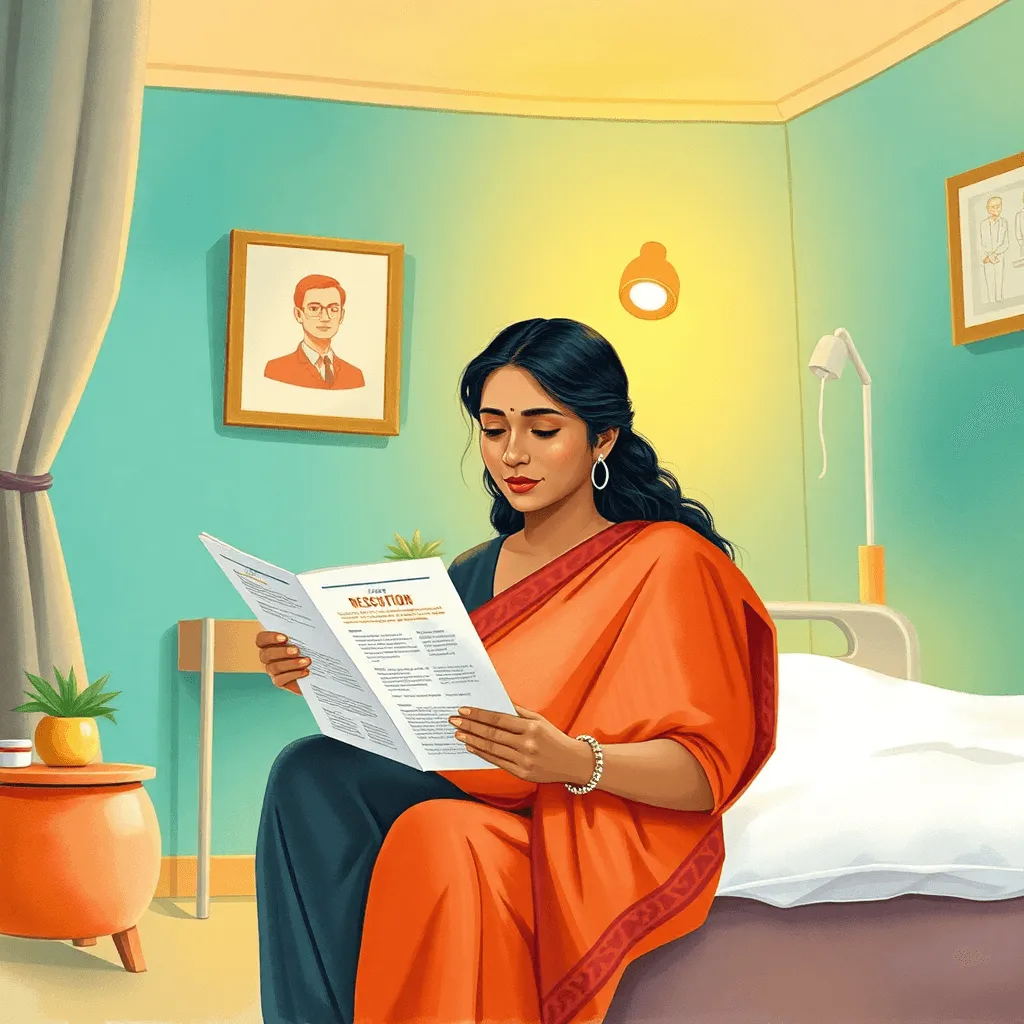
Illustration: POI means the ovaries slow down years earlier than expected, but support and good options exist. Source: ferti.health Editorial Team.
Causes & Risk Factors
In most women the exact cause is never found, which doctors call idiopathic POI. When a cause is identified, it usually falls into one of a few groups. Genetic causes include Turner syndrome and changes in the FMR1 gene, known as the Fragile X premutation, which is also worth knowing about because it can run in families. Autoimmune conditions, where the immune system mistakenly affects the ovaries, are another recognised cause and may occur alongside thyroid or adrenal disease.
POI can also be iatrogenic, meaning it follows medical treatment. Surgery on the ovaries, chemotherapy, or radiation to the pelvis can all reduce the egg supply. If you are about to start cancer treatment, ask about fertility preservation before it begins. Importantly, POI is not caused by stress, contraception, or anything you did wrong.
Symptoms & Signs
The first sign is usually a change in your periods. They may become irregular, lighter, more spaced out, or stop altogether, often after months or years of being regular. Because oestrogen levels fall, many women also notice menopausal symptoms even though they are young. These can include hot flushes, night sweats, vaginal dryness, low mood, poor sleep, and reduced sex drive.
Some women have very few symptoms and only learn about POI when they struggle to conceive. Whatever your experience, irregular or absent periods before 40, with or without other symptoms, deserve a proper check. Early diagnosis protects your bones, heart, and emotional wellbeing.
Irregular or absent periods
Cycles that become unpredictable, lighter, widely spaced, or stop entirely before age 40.
Hot flushes and night sweats
Sudden waves of heat and sweating caused by falling oestrogen levels.
Vaginal dryness
Reduced lubrication that can make intercourse uncomfortable.
Mood and sleep changes
Low mood, irritability, anxiety, or difficulty sleeping linked to hormone shifts.
Reduced sex drive
A noticeable drop in libido that often improves with treatment.
Difficulty conceiving
Trouble becoming pregnant, sometimes the first clue that prompts testing.
Diagnosis
POI is diagnosed when periods are irregular or absent for at least four months and a blood test shows a raised follicle-stimulating hormone (FSH) level, usually confirmed by a second FSH test about four to six weeks later. The ESHRE guideline recommends this two-sample approach because hormone levels naturally fluctuate, so one high reading is not enough to be sure.
Once POI is confirmed, your doctor will look for a cause. This often includes a karyotype to check chromosomes, an FMR1 (Fragile X) test, and a screen for autoimmune and thyroid conditions. Oestradiol and anti-Mullerian hormone (AMH) help show how much ovarian activity remains. These tests guide both your health care and your family planning.
Age under 40
Symptoms and tests must point to loss of ovarian function before the age of 40.
Menstrual disturbance for at least 4 months
Irregular or absent periods (oligomenorrhoea or amenorrhoea) for four months or more.
Raised FSH on two occasions
A follicle-stimulating hormone level in the menopausal range, confirmed on two samples taken at least four weeks apart.
Standard Diagnostic Tests in India
- FSH (two samples) — Follicle-stimulating hormone measured twice, four to six weeks apart, to confirm a consistently raised level.
- Oestradiol — A blood test that shows how much oestrogen the ovaries are still producing.
- Anti-Mullerian hormone (AMH) — A marker of the remaining egg supply, which is typically very low in POI.
- Karyotype — A chromosome test that can detect Turner syndrome and other genetic causes.
- FMR1 (Fragile X) testing — Checks for the FMR1 premutation, which is an important and inheritable cause.
- Autoimmune and thyroid screen — Blood tests for autoimmune and thyroid conditions that can accompany POI.
How POI Affects Fertility
POI lowers fertility because the ovaries release eggs rarely and unpredictably. The key point, and a hopeful one, is that ovarian function in POI is often intermittent rather than gone. About 5 to 10% of women with POI conceive spontaneously over time, usually unexpectedly, because an ovary occasionally wakes up and releases an egg. This is why POI is described as insufficiency, not failure.
That same intermittent activity makes natural conception hard to plan or predict, and it cannot be reliably boosted with standard fertility drugs. For most women who want to be pregnant, the most dependable path is treatment using donor eggs. This is a deeply personal decision, and there is no wrong choice. A specialist can help you weigh the options that fit your values and circumstances.
- Infrequent ovulation: Eggs are released rarely and unpredictably, so natural conception is uncommon and hard to time.
- Intermittent ovarian function: Ovarian activity can come and go, which is why pregnancy occasionally happens by surprise.
- Low spontaneous conception: About 5 to 10% of women with POI conceive naturally over time, usually without planning.
- Limited response to fertility drugs: Standard ovarian stimulation rarely works well because so few eggs remain.
- Healthy uterus in most cases: The womb usually stays able to carry a pregnancy, which is why donor-egg treatment is effective.
Hopeful Outlook
A POI diagnosis is hard news, but it is not the end of your story. Hormone therapy can keep you feeling well and protect your bones and heart for years to come. Around 5 to 10% of women conceive naturally despite POI, and for those who want a more reliable path, donor-egg IVF offers success rates similar to women without the condition. With the right medical care, honest information, and emotional support, many women with POI go on to build the families and lives they hoped for.
Treatment Options
Treatment has two separate goals: protecting your long-term health and, if you wish, helping you have a baby. For health, hormone replacement therapy (HRT) is recommended for most women with POI until at least the natural age of menopause, around 50. Replacing the oestrogen your ovaries no longer make protects your bones and heart and eases menopausal symptoms. HRT is not the same as contraception, so discuss both if pregnancy is possible.
For family building, donor-egg IVF offers the highest success and is often the recommended path. If POI is caught very early and some ovarian function remains, fertility preservation such as egg or embryo freezing may be possible, though success is not guaranteed. Whatever route you consider, emotional support and counselling are an important part of care.
Hormone replacement therapy (HRT)
Replaces the oestrogen your ovaries no longer make, protecting bone and heart health and easing menopausal symptoms, recommended until about age 50.
Donor-egg IVF
Uses eggs from a younger donor, fertilised and transferred to your womb. This is the highest-success route to pregnancy for most women with POI.
Fertility preservation
Freezing eggs or embryos if POI is caught very early and some ovarian function remains, or before cancer treatment that may harm the ovaries.
Counselling and emotional support
Professional support helps process the diagnosis and make confident decisions about treatment and family building.
POI & IVF: What to Expect
With POI, the most reliable IVF route uses eggs donated by a younger woman. Research shows donor-egg IVF works just as well in women with POI as in other recipients, because the womb itself usually remains healthy and able to carry a pregnancy. Success depends mainly on the donor's age and egg quality, not on your own ovaries, which is reassuring news.
In a donor-egg cycle, the donor's eggs are fertilised with sperm and the resulting embryo is transferred to your womb after a short course of hormones to prepare the lining. In India, donor and ART treatment is regulated under the ART Act, and clinics report outcomes to the National ART and Surrogacy Registry. Choose a registered clinic, ask about its live birth rates, and take the time you need to feel ready.
Frequently Asked Questions
Can I still get pregnant naturally with POI?
Is POI the same as early menopause?
Why is donor-egg IVF recommended for POI?
Do I need hormone therapy even if I am not trying to conceive?
Is donor-egg treatment legal in India?
Sources & Citations
- Webber L, Davies M, Anderson R, et al. ESHRE Guideline: management of women with premature ovarian insufficiency. Hum Reprod. 2016;31(5):926-937. PubMed PMID: 27008889. PubMed
- Nelson LM. Clinical practice. Primary ovarian insufficiency. N Engl J Med. 2009;360(6):606-614. PubMed PMID: 19196677. PubMed
- Coulam CB, Adamson SC, Annegers JF. Incidence of premature ovarian failure. Obstet Gynecol. 1986;67(4):604-606. PubMed PMID: 3960433. PubMed
- Shamilova NN, Marchenko LA, Dolgushina NV, et al. The role of genetic and autoimmune factors in premature ovarian failure. J Assist Reprod Genet. 2013;30(5):617-622. PubMed PMID: 23504400. PubMed
- Lydic ML, Liu JH, Rebar RW, Thomas MA, Cedars MI. Success of donor oocyte in in vitro fertilization-embryo transfer in recipients with and without premature ovarian failure. Fertil Steril. 1996;65(1):98-102. PubMed PMID: 8557162. PubMed
- National ART and Surrogacy Registry of India, Department of Health Research (ICMR). Accessed 2026. ICMR Registry